How I turn an advertising brief into on-screen action
Maria Petrova, co-founder and lead director at NOSLOP

When I read an advertising brief, I first look for the action that will help the viewer understand the product. Words such as “care”, “freedom” or “pleasure” give us a direction, but say nothing yet about the actual shot. I need to decide who will be in front of the camera, what they want and what the product will change for them. That is where directing a commercial begins.
Imagine a drink commercial promising a brief moment of respite. We could show a beautiful glass on a sunny table. I would first find a situation where that pause is truly needed: someone comes home, still mentally finishing a work call, takes a sip and finally notices the evening outside. There is a small shift in their state of mind. Now we know why the drink belongs in the story.
That shift determines the staging. At first, the character might move quickly and look past the person they are talking to. Then a gesture slows, their shoulders relax and their gaze lingers. The camera has a reason to move closer. A close-up belongs at the moment of change; a wide shot helps us feel the surrounding space. I choose an angle for what it lets the viewer notice.
I approach the product in the same way. Its presence must be built into the action: how someone picks up the packaging, which way they turn it and when the name becomes visible. If the brand is only considered at the final packshot, the story may turn out to exist independently of it. That is why I check the product’s relationship to the action at the script and storyboard stage.
Sound enters the process here too. The click of a lid can signal the start of a pause, while fading city noise marks a shift in the character’s attention. Sometimes a short breath without music is enough to create the right feeling. When sound is conceived alongside action, it helps allocate time: when viewers should focus, when they should wait and when they should feel the resolution.
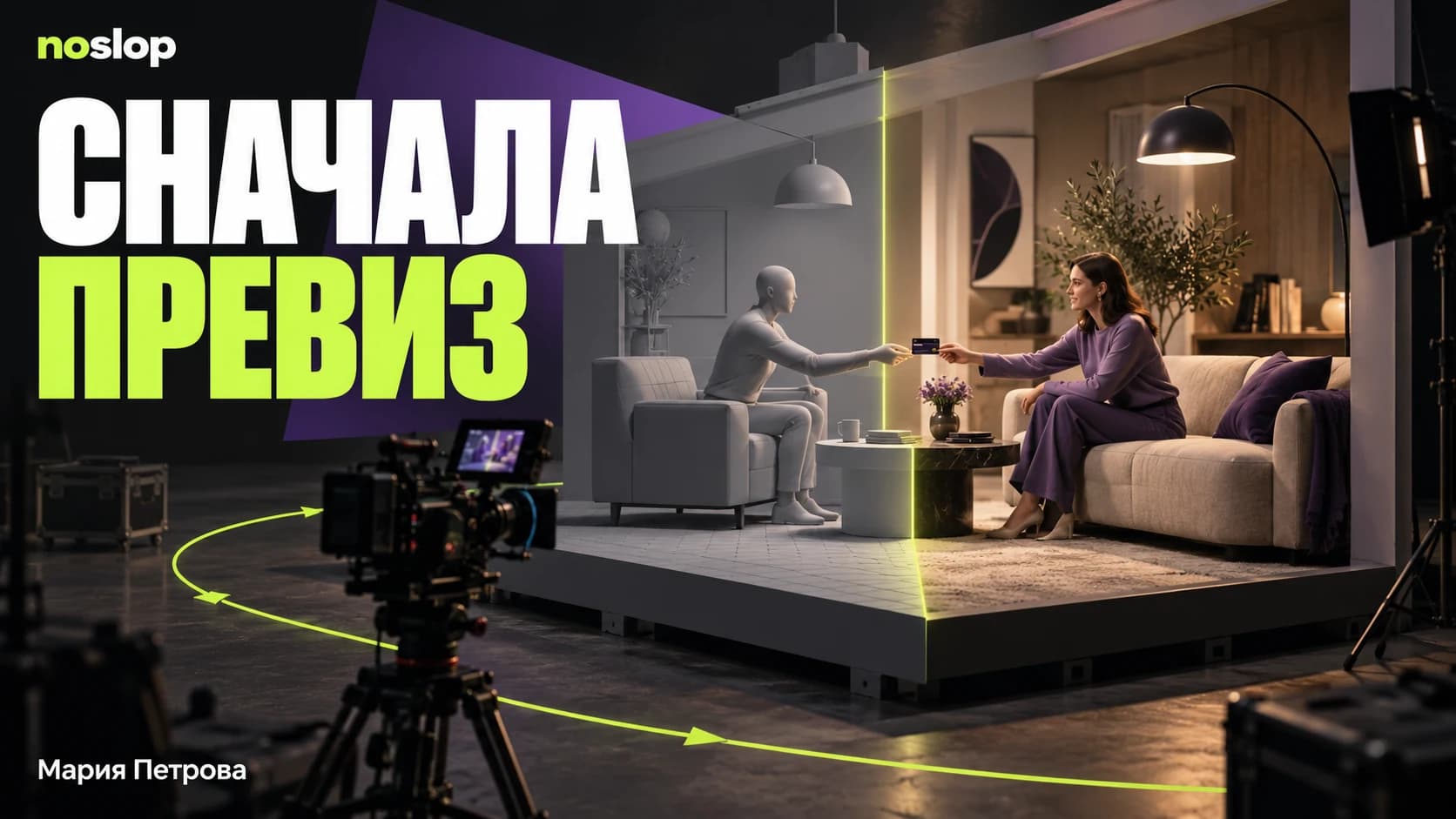
In AI production, these decisions form the team’s brief. Before animation, we at NOSLOP define the character, setting, key frames and editing sequence. I check whether a gesture continues across a cut, whether eyelines match and whether there is enough time for a reaction. Even a strong individual take still has to work alongside its neighbouring shots.
I pay particular attention to cutdowns. A fifteen-second version may not have time for the same setup as a thirty-second film. We then have to redistribute the emphasis while preserving the reason for the action and the product’s role. Simply speeding up the edit can remove the very pause the scene was built around.
What matters to me is that, after watching, someone can explain in their own words what happened and how the brand was involved. That is why I suggest starting a discussion about a film with the impression we want to leave on the viewer. Once that is clear, every gesture, sound and camera movement has a specific purpose.